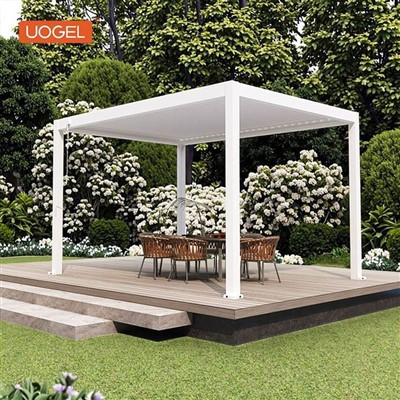
When it comes to outdoor living spaces, having a reliable shelter that can handle various weather conditions is essential. One popular option that has gained significant attention in recent years is the louvered roof, especially when integrated into an Aluminium Gazebo with Louvered Roof. As a supplier of these high - quality structures, I am often asked about how the louvered roof effectively handles rain. In this blog, I will delve into the details of this functionality.
The Basics of a Louvered Roof
A louvered roof consists of a series of horizontal slats or louvers that can be adjusted. These louvers are typically made from materials like aluminum, which offers durability, lightweight properties, and resistance to corrosion. The adjustability of the louvers is the key feature that allows the roof to adapt to different weather conditions, including rain.
How the Louvered Roof Deals with Rain
1. Adjustability for Optimal Water Run - off
The primary way a louvered roof handles rain is through its adjustable louvers. When rain is approaching or has just started, the louvers can be closed to form a solid barrier against the water. By closing the louvers completely, the roof creates a tight seal that prevents rain from dripping through. The angle of the louvers can also be adjusted to ensure proper water run - off. A slight downward slope of the louvers directs the rainwater towards the edges of the roof, where it can then drain off safely. This is similar to the way a pitched roof works, but with the added flexibility of being able to adjust the angle according to the intensity of the rain.
For example, during a light drizzle, the louvers can be set at a relatively shallow angle to allow the water to gently flow off. However, in a heavy downpour, a steeper angle may be required to prevent water from pooling on the roof. This adjustability is a significant advantage over traditional fixed - roof structures, as it allows for a more customized response to different rain conditions.


2. Water Channeling Systems
Many louvered roofs, especially those in high - quality Aluminium Gazebo with Louvered Roof models, are equipped with water channeling systems. These systems are designed to collect the rainwater that runs off the louvers and direct it away from the structure. The channels are usually integrated into the frame of the roof and are strategically placed to capture the water as it flows down the louvers.
Once the water is collected in the channels, it is then directed towards downspouts or drainage points. This ensures that the water is safely removed from the area around the gazebo, preventing flooding or water damage to the surrounding landscape. The water channeling systems are often designed to be hidden or minimally visible, maintaining the aesthetic appeal of the gazebo while providing a practical solution for rain management.
3. Sealing and Gaskets
To further enhance the rain - handling capabilities of the louvered roof, sealing and gaskets are used. Sealing materials are applied between the louvers and the frame of the roof to prevent any water from seeping through the joints. Gaskets are also used to create a tight seal when the louvers are closed. These gaskets are made from materials that are resistant to water, UV rays, and temperature changes, ensuring long - term durability.
The quality of the sealing and gaskets is crucial in determining how well the louvered roof can keep the interior of the gazebo dry during heavy rain. High - quality seals and gaskets will prevent even the smallest amounts of water from entering, providing a dry and comfortable outdoor living space even in the most challenging weather conditions.
Motorized vs. Manual Louvered Roofs in Rain Handling
1. Motorized Louvered Roofs
Motorized louvered roofs, such as those found in Pergola With Motorized Roof, offer a high level of convenience when it comes to handling rain. With a motorized system, the louvers can be adjusted with just the push of a button. This is especially useful when sudden rain showers occur, as you can quickly close the louvers to protect your outdoor furniture and guests.
Some motorized louvered roofs can even be connected to weather sensors. These sensors can detect changes in weather conditions, such as the onset of rain, and automatically adjust the louvers accordingly. This hands - free operation ensures that the gazebo is always protected from rain, even when you are not around to manually adjust the louvers.
2. Manual Louvered Roofs
Manual louvered roofs, on the other hand, require physical effort to adjust the louvers. While they may lack the convenience of motorized systems, they are still effective in handling rain. Manual adjustment allows for a more hands - on approach, where you can precisely control the angle of the louvers based on your observation of the rain conditions. However, it does require you to be present at the gazebo to make the necessary adjustments.
Maintenance for Rain - Handling Performance
To ensure that the louvered roof continues to handle rain effectively, regular maintenance is essential. This includes cleaning the louvers and the water channeling systems. Over time, debris such as leaves, twigs, and dirt can accumulate on the louvers and in the channels, blocking the water flow. By regularly cleaning these components, you can prevent water from pooling on the roof and ensure proper drainage.
Inspecting the sealing and gaskets is also important. Check for any signs of wear or damage, such as cracks or tears. If any issues are found, the seals and gaskets should be replaced promptly to maintain the waterproof integrity of the roof.
The Advantages of an Aluminium Louvered Roof in Rainy Conditions
Aluminum is an excellent material for louvered roofs, especially in rainy environments. Aluminum is highly resistant to corrosion, which means that the roof will not rust or deteriorate over time due to exposure to rainwater. This durability ensures that the louvered roof will continue to function effectively for many years, even in areas with high rainfall.
In addition, aluminum is lightweight, which makes it easier to install and adjust the louvers. The lightweight nature of the material also reduces the stress on the supporting structure of the gazebo, making it a more stable and reliable option for outdoor shelter.
Conclusion
In conclusion, the louvered roof is a highly effective solution for handling rain in outdoor living spaces. Its adjustable louvers, water channeling systems, sealing, and gaskets work together to create a waterproof barrier that protects the interior of the Aluminium Gazebo with Louvered Roof from rain. Whether you choose a motorized or manual system, proper maintenance is crucial to ensure optimal performance.
If you are interested in enhancing your outdoor space with a reliable and stylish louvered roof, we invite you to explore our range of Aluminium Gazebo with Louvered Roof and Metal Pergola With Louvered Roof products. Our team is ready to assist you in finding the perfect solution for your needs. Contact us today to start the conversation about your outdoor living project.
References
- General knowledge of outdoor construction and louvered roof technology.
- Industry research on the performance of louvered roofs in different weather conditions.