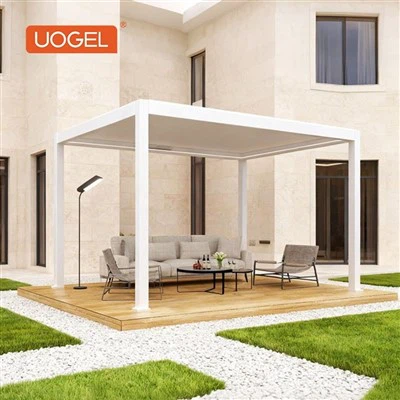
As a supplier of Metal Gazebos with Louvered Roofs, I've witnessed firsthand the increasing popularity of these structures. Homeowners and business owners alike are drawn to their aesthetic appeal and functional benefits. One of the most significant advantages of a louvered roof on a metal gazebo is its impact on the temperature inside the structure. In this blog post, I'll delve into how the louvered roof affects the internal temperature of a metal gazebo, exploring the scientific principles behind it and sharing real-world insights.
The Science of Temperature Regulation
To understand how a louvered roof impacts the temperature inside a metal gazebo, we first need to grasp the basic principles of heat transfer. There are three main ways heat can move: conduction, convection, and radiation.
- Conduction: This is the transfer of heat through direct contact between materials. In a metal gazebo, conduction can occur when the sun heats the metal frame, which then transfers heat to the air inside the gazebo.
- Convection: Convection involves the movement of heat through the circulation of fluids (in this case, air). As warm air rises, cooler air rushes in to replace it, creating a natural flow of air.
- Radiation: Radiation is the transfer of heat through electromagnetic waves. The sun emits radiation, which can penetrate the gazebo and heat up the surfaces inside.
A louvered roof plays a crucial role in managing all three types of heat transfer, helping to maintain a comfortable temperature inside the gazebo.


How Louvered Roofs Manage Heat Transfer
Blocking Solar Radiation
One of the primary functions of a louvered roof is to block solar radiation. The adjustable louvers can be angled to shade the interior of the gazebo from direct sunlight. By reducing the amount of solar radiation that enters the structure, the louvered roof helps to keep the temperature inside cooler. This is especially important during the peak hours of sunlight when the sun's rays are the strongest.
For example, on a hot summer day, if the louvers are fully closed and angled to block the sun, the interior of the gazebo can be significantly cooler than the outside temperature. This is because the louvers act as a barrier, preventing the sun's heat from directly hitting the surfaces inside the gazebo.
Promoting Air Circulation
Louvered roofs also enhance air circulation within the gazebo. When the louvers are open, they allow hot air to escape from the top of the structure, while cooler air can enter from the sides. This natural convection process helps to ventilate the gazebo and maintain a comfortable temperature.
Imagine a scenario where the louvers are partially open. As the sun heats the air inside the gazebo, the warm air rises and exits through the louvers at the top. At the same time, cooler air from the surrounding environment is drawn in through the open sides of the gazebo, creating a continuous flow of fresh air. This not only helps to cool the interior but also reduces humidity, making the space more comfortable to be in.
Reducing Conduction
The design of a louvered roof can also help to reduce conduction. By creating a layer of air between the metal frame of the gazebo and the outside environment, the louvers act as an insulator. This layer of air slows down the transfer of heat from the hot metal frame to the interior of the gazebo.
For instance, during the day, when the metal frame of the gazebo is heated by the sun, the louvered roof prevents the heat from quickly transferring to the air inside. Instead, the heat is dissipated through the open louvers and the surrounding air, keeping the interior temperature more stable.
Real-World Benefits of Temperature Regulation
The ability of a louvered roof to regulate temperature has several practical benefits for users of metal gazebos.
Extended Usability
By keeping the interior of the gazebo cool, a louvered roof allows for extended usability throughout the day. Whether it's a hot summer afternoon or a sunny spring day, the gazebo can be a comfortable place to relax, entertain guests, or enjoy outdoor activities. Without a louvered roof, the interior of the gazebo would become too hot to use during the peak hours of sunlight, limiting its functionality.
Energy Savings
In some cases, a well-designed louvered roof can even help to reduce energy consumption. If the gazebo is used as an outdoor living space, the cooler interior temperature may mean less reliance on air conditioning or fans. This can lead to significant energy savings over time, making the louvered roof a cost-effective addition to the gazebo.
Comfort and Well-being
A comfortable temperature inside the gazebo enhances the overall experience for users. Whether you're reading a book, having a meal, or simply enjoying the outdoors, a cool and well-ventilated space can make a big difference. The louvered roof helps to create a pleasant environment that promotes relaxation and well-being.
Choosing the Right Louvered Roof for Your Metal Gazebo
When selecting a louvered roof for your metal gazebo, there are several factors to consider.
Material
The material of the louvered roof can affect its performance. Aluminum is a popular choice for louvered roofs due to its durability, lightweight nature, and resistance to corrosion. Powder Coated Aluminum Pergola offers additional protection against the elements, ensuring that the louvered roof maintains its appearance and functionality over time.
Adjustability
The ability to adjust the louvers is crucial for effective temperature regulation. Look for a louvered roof that allows for easy adjustment, either manually or through a motorized system. Diy Motorized Louvered Pergola provides the convenience of adjusting the louvers with the touch of a button, making it easier to control the amount of sunlight and air circulation inside the gazebo.
Design
The design of the louvered roof can also impact its performance. Consider the size and shape of the louvers, as well as the overall layout of the roof. A well-designed louvered roof will maximize the benefits of temperature regulation while enhancing the aesthetic appeal of the gazebo.
Conclusion
In conclusion, a louvered roof has a significant impact on the temperature inside a metal gazebo. By blocking solar radiation, promoting air circulation, and reducing conduction, the louvered roof helps to maintain a comfortable temperature throughout the day. This not only extends the usability of the gazebo but also provides energy savings and enhances the overall comfort and well-being of users.
If you're considering adding a metal gazebo with a louvered roof to your outdoor space, I encourage you to explore our range of products. We offer high-quality Pergola With Roof That Opens And Closes that are designed to provide optimal temperature regulation and functionality. Contact us today to discuss your requirements and learn more about how our louvered roofs can transform your outdoor living experience.
References
- ASHRAE Handbook of Fundamentals. American Society of Heating, Refrigerating and Air-Conditioning Engineers.
- "Thermal Performance of Building Envelopes" by Joseph Lstiburek. Building Science Corporation.